.png)
Gynecomastia in Dubai: Complete Patient Guide
Gynecomastia is the enlargement of breast tissue in males, affecting a significant proportion of men at some point in their lives. It can develop due to hormonal imbalances, certain medications, liver disease, obesity, or genetic predisposition.
While not a medical emergency, gynecomastia can cause physical discomfort (tenderness, pain) and significant psychological distress, including reduced confidence and reluctance to be shirtless in public.
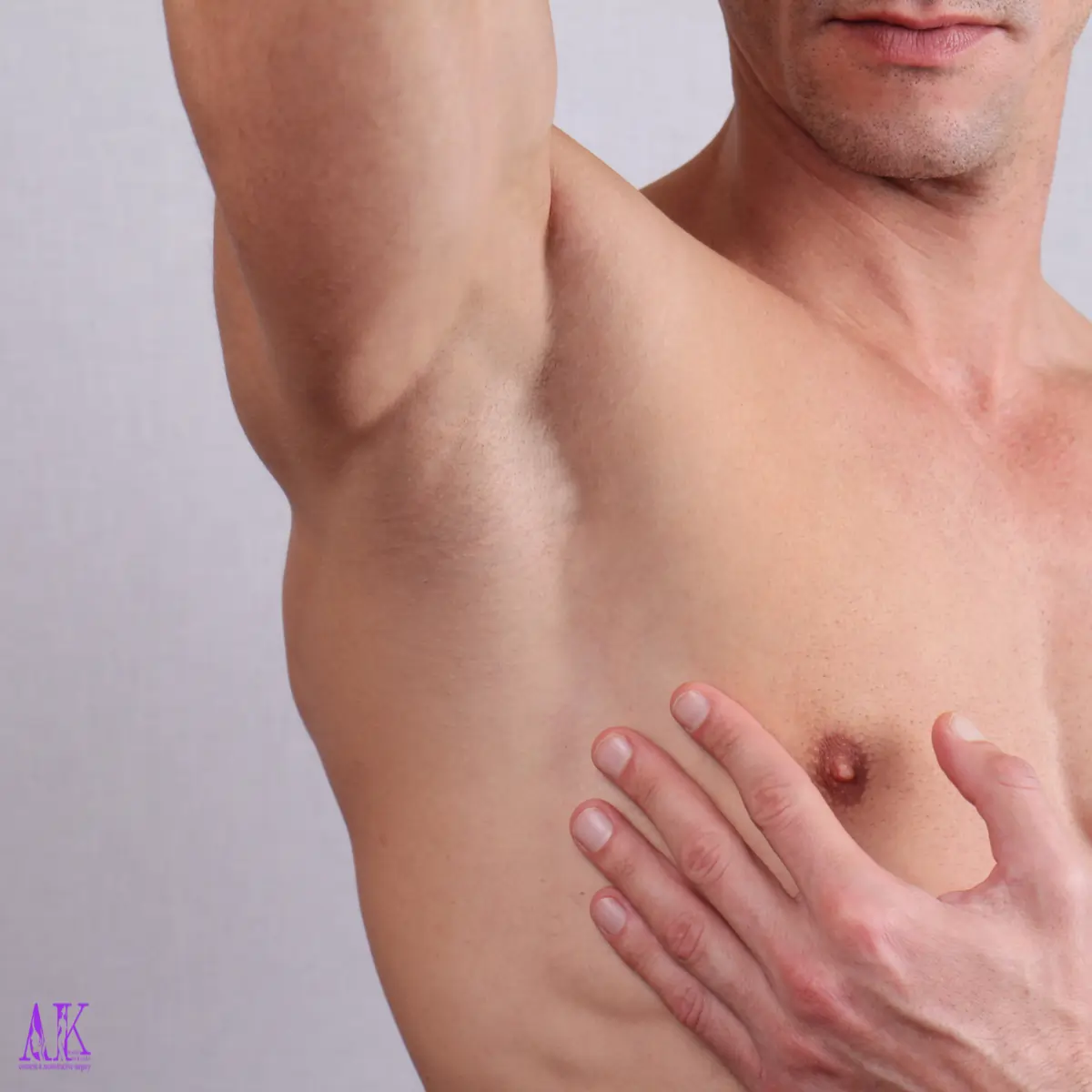
Understanding Gynecomastia
What Is Gynecomastia?
Gynecomastia is the enlargement of breast tissue in males, affecting a significant proportion of men at some point in their lives. It can develop due to hormonal imbalances, certain medications, liver disease, obesity, or genetic predisposition. While not a medical emergency, gynecomastia can cause physical discomfort (tenderness, pain) and significant psychological distress, including reduced confidence and reluctance to be shirtless in public.[2][4]
The condition is characterized by palpable breast tissue—either soft glandular tissue, fatty tissue, or a combination of both. Understanding what type of tissue is enlarging is essential, as it determines the most effective treatment approach.
True vs. Pseudo Gynecomastia (Decision Tree)
Gynecomastia falls into two main categories, and knowing which you have is crucial for choosing the right treatment:
| Type | What It Is | What You Feel | Best Treatment |
|---|---|---|---|
| True Gynecomastia | Excess glandular (breast) tissue | Firm, rubbery lump typically under or around the nipple | Surgical excision (removal of tissue) + possible liposuction |
| Pseudo Gynecomastia (Lipomastia) | Excess fatty tissue without glandular enlargement | Soft, diffuse breast area that feels like chest fat | Liposuction or non-surgical fat reduction (CoolSculpting) |
How to Do a Self-Check:
- Gently press the tissue directly beneath and around your nipple.
- If you feel a firm, disc-like mass (like a coin or marble), you likely have true gynecomastia.
- If the entire chest area feels soft and fatty without a distinct lump, you likely have pseudo-gynecomastia.
- Important: Only ultrasound or imaging can definitively confirm. Don't self-diagnose—a surgeon will assess you properly.
Causes & Risk Factors
Gynecomastia can stem from multiple causes:
- Hormonal imbalance (elevated estrogen or low testosterone relative to estrogen)[4]
- Genetic predisposition (runs in families)[6]
- Medications (certain antiandrogens, steroids, hormone therapies, some antidepressants)
- Obesity (fatty tissue produces estrogen)[4]
- Lifestyle factors (heavy alcohol consumption, cannabis use)[4]
- Medical conditions (liver disease, thyroid problems, kidney disease)
- Age (can occur at any age but common in adolescence and older men)
- Idiopathic (cause unknown, despite testing)
If you suspect an underlying condition, your surgeon will take a detailed medical history and may recommend blood work to rule out hormonal or health issues before treatment.
How Common Is It?
Gynecomastia affects a significant percentage of men. It's particularly common in adolescents (due to normal hormonal fluctuations during puberty) and in older men. Despite its prevalence, many men suffer in silence due to embarrassment, making it an underreported condition.
Is Gynecomastia Right for Treatment? (Self-Assessment)
Candidacy Checklist
You may be a good candidate for gynecomastia treatment if:
- ☐ You have stable weight (within 10 lbs) for at least 6 months
- ☐ You are in generally good health (no uncontrolled chronic conditions)
- ☐ You are at least 18 years old (wait until late teens for true gynecomastia, as some resolves naturally)
- ☐ You have realistic expectations (improvement, not perfection)
- ☐ You are motivated to treat (for your own confidence, not pressure from others)
- ☐ You have tried non-surgical options first (if mild) or understand why surgery is necessary for your case
- ☐ You can commit to recovery downtime (if choosing surgery)
You may NOT be a candidate if:
- ☐ You have significant uncontrolled medical conditions (discuss with your surgeon)
- ☐ You are actively taking medications causing gynecomastia (talk to your doctor about alternatives first)
- ☐ You have unrealistic expectations (expecting perfection or symmetry)
- ☐ You are not emotionally ready (strong psychological distress unrelated to the condition itself may benefit from counseling first)
Mild, Moderate, or Severe? (Severity Guide)
| Severity | Signs | Typical Treatment |
|---|---|---|
| Mild | Barely noticeable to the person; no visible tissue when clothed; patient reports only tenderness or mild psychological concern | Watchful waiting, lifestyle changes, or non-surgical options (CoolSculpting) if patient desires |
| Moderate | Visible puffiness or fullness on examination; noticeable when shirtless but can be concealed with tight clothing or layers; causes some psychological distress | Non-surgical options (if fat-based) or surgical treatment (if glandular or mixed) |
| Severe | Obvious enlargement visible through clothing; significant sagging or excess skin; marked psychological impact; may cause physical discomfort | Surgical treatment (liposuction, excision, or combination) typically recommended |
Your surgeon will assess severity during consultation and recommend the appropriate approach.
Should I Try Non-Surgical First? (Decision Flowchart)
START: Are you interested in treating gynecomastia?
│
├─→ YES: Do you have severe psychological distress or severe physical symptoms?
│         ├─→ YES → Consider surgery (see Surgical Treatment Options below)
│         ├─→ NO → Is your gynecomastia mild and primarily fatty?
│                  ├─→ YES → Try non-surgical options first (see below)
│                  ├─→ NO (glandular/mixed) → Surgery likely most effective
│
├─→ NO: Reassess in 6–12 months if condition worsens; speak to doctor if there's underlying cause
Non-Surgical Treatment Options
Non-surgical approaches work best for mild cases, primarily fatty tissue (pseudo-gynecomastia), and patients seeking to avoid surgery or downtime. Results are modest compared to surgery and may take longer to appear.
Lifestyle Changes
Diet & Exercise:
- Caloric deficit (if overweight) to reduce overall body fat
- Chest-specific exercises (push-ups, bench presses, chest flies) to build pectoral muscle and improve appearance
- General cardiovascular exercise to reduce body fat percentage
Timeline: 3–6 months of consistent effort
Realistic Results: 20–40% improvement in mild cases; more noticeable in pseudo-gynecomastia; true glandular tissue typically doesn't shrink with exercise alone
Alcohol & Substance Reduction:
- Eliminate or significantly reduce alcohol (estrogen production increases with heavy drinking)
- Stop cannabis use if present (linked to gynecomastia in some cases)
Timeline: Results may appear within 2–3 months of lifestyle change
Medications
Tamoxifen & Raloxifene (Selective Estrogen Receptor Modulators):
These prescription medications block estrogen effects on breast tissue. They are sometimes used in early-stage or adolescent gynecomastia.
- Efficacy: Works best in early gynecomastia (< 12 months duration); less effective in long-standing cases
- Side effects: Varies by individual; discuss with your doctor
- Availability in Dubai: Available by prescription; discuss with your physician or surgeon
- Timeline: Results, if any, appear over 3–6 months
- Cost: Varies; generally affordable if insurance covers
Reality Check: Medications are not highly effective in established gynecomastia and are rarely the sole solution.
CoolSculpting (Non-Invasive Fat Reduction)
How It Works: CoolSculpting is a non-invasive procedure that applies controlled cold to freeze and permanently destroy fat cells. The body then naturally eliminates these cells over weeks to months. It works only on fat tissue, not glandular tissue.[5]
Who Is It Best For:
- Mild pseudo-gynecomastia (fatty tissue only, no firm glandular lump)
- Patients seeking zero downtime
- Patients unwilling to undergo surgery
Procedure Details:
- Duration: 35–60 minutes per session[5]
- Anesthesia: None required (mild coldness during treatment, then numbness)
- Sessions needed: Usually 1–2 sessions for best results[5]
- Discomfort: Minimal; described as mild unpleasantness[5]
Recovery & Downtime:
- Downtime: None[5]—patients can return to normal activities immediately
- Returning to exercise: Immediately (no restrictions)
- Returning to work: Same day
Results Timeline:
- Initial results: 4 weeks[5]
- Final results: 3 months[5]
- Results last: Permanent (destroyed fat cells do not return, but weight gain can create new fat cells)
Realistic Results: CoolSculpting typically achieves a modest reduction (15–30%) in localized fat. It is not a replacement for liposuction or surgery in moderate to severe cases.
Cost: Lucia Clinic offers CoolSculpting in Dubai; typical cost varies by extent and sessions required. Non-invasive procedures are usually less expensive than surgery but more expensive than lifestyle modifications.
Maintenance:
- Repeat sessions every 3 months if desired for progressive results[5]
- Results depend on maintaining stable weight
When Non-Surgical Options Don't Work
If you have tried non-surgical options for 3–6 months without satisfactory results, or if your gynecomastia is moderate to severe, or if the tissue is predominantly glandular, surgical treatment is likely the most effective option. See the Surgical Treatment Options section below.
Surgical Treatment Options (Male Breast Reduction)
Surgical treatment is the most effective and permanent solution for moderate to severe gynecomastia and for cases with significant glandular tissue. Multiple surgical techniques exist; the best choice depends on whether your tissue is primarily fatty, primarily glandular, or mixed.[8]
Overview of Surgical Approaches
Three main surgical techniques are used, often in combination:
- Liposuction: Removes excess fat via small cannulas (tubes)
- Excision: Removes glandular tissue or excess skin surgically
- Combination: Uses both techniques when tissue is mixed or extensive
Your surgeon will examine you and recommend the best approach for your specific case.
Liposuction for Gynecomastia
Best for: Pseudo-gynecomastia (fatty tissue) and cases with minimal glandular tissue[3][4]
How It Works: Small incisions (3–4 mm) are made, typically at the side of the chest or under the arm. A thin tube called a cannula is inserted to loosen and suction out excess fatty tissue, reshaping the chest contour.[2]
Advantages:
- Minimally invasive (small incisions)
- Faster recovery than excision alone
- Effective sculpting of the chest
- Minimal scarring (incisions are tiny and heal well)
Considerations:
- Does not remove glandular tissue (ineffective for true gynecomastia)
- Skin retraction depends on skin quality and elasticity
Incisions & Scarring:
- Incisions are typically 3–4 mm, placed discreetly (side of chest, under arm, or around nipple)
- Scars are minimal and usually fade to barely visible within 6–12 months
Tissue Excision (Glandular Removal)
Best for: True gynecomastia (glandular tissue) and cases requiring nipple repositioning[2]
How It Works: A small incision is made, typically around the nipple (semi-circular or along the lower border). The surgeon removes the firm glandular tissue ("lump") and may remove excess skin if needed.[2] In more extensive cases, a larger incision may be necessary.[2]
Advantages:
- Directly removes glandular tissue
- Can reposition or reduce nipple size if needed
- Effective for severe cases with skin excess
Considerations:
- Larger incision than liposuction alone (still relatively small for plastic surgery)
- Slightly longer recovery
- Permanent scar around the nipple or lower breast fold
Incisions & Scarring:
- Primary incision: Semi-circular or along the lower border of the nipple/areola
- Scars: Heal within the natural contours and typically fade well; less noticeable after 12 months
- Note: Scars are permanent but usually pale and inconspicuous over time
Combination Approach (Liposuction + Excision)
Best for: Mixed gynecomastia (both glandular tissue and excess fat) and extensive cases[2]
How It Works: Liposuction is used to remove fatty tissue, and a small excision removes the glandular core. This provides optimal contouring and treats both components.[2]
Advantages:
- Addresses all tissue types
- Superior aesthetic results
- Customizable to each patient's anatomy
Incisions & Scarring:
- Combination of small liposuction incisions and a small excision scar (usually around nipple)
- Overall scarring is minimal and well-hidden
Surgical Procedure Details
Pre-Surgery Preparation
Medical Clearance: You will need clearance from your primary care doctor or internist, especially if you have any chronic medical conditions. Blood work and possibly an EKG may be required (depending on age and health).
Medications to Stop/Adjust:
- Blood thinners (aspirin, ibuprofen, warfarin, etc.): Stop 1–2 weeks before surgery (consult your surgeon)
- Certain supplements (vitamin E, fish oil, ginkgo): Stop 1 week before surgery
- Continue most other medications as prescribed unless your surgeon advises otherwise
Fasting:
- NPO (nothing by mouth): Typically 6–8 hours before surgery (no food, water, or medications by mouth)
- Your surgical team will provide specific fasting instructions
Preparation Day Before:
- Arrange transportation (you cannot drive after general anesthesia)
- Arrange time off work (see Recovery Timeline section)
- Wash with antibacterial soap the evening before (if instructed)
Anesthesia Options
General Anesthesia: Most gynecomastia surgeries are performed under general anesthesia, meaning you are completely asleep.[2] An anesthesiologist monitors your vital signs throughout. This is the safest option for comprehensive tissue removal.
Local Anesthesia with Sedation (Twilight Anesthesia): For minor liposuction-only cases, some surgeons offer local anesthesia with sedation, meaning you are awake but relaxed and don't feel pain. You may not remember the procedure. This is less common for gynecomastia but possible for very small cases.
Your surgeon will recommend the appropriate anesthesia based on the extent of your surgery.
Step-by-Step Procedure Walkthrough
Typical surgical steps:
- Positioning: You lie supine (on your back) on the operating table
- Marking: The surgeon marks the incision sites and areas to be treated
- Anesthesia Administration: Anesthesia is administered (you fall asleep)
- Skin Prep: The surgical area is cleaned with antiseptic solution
- Incisions: Small incisions are made at predetermined sites
- Tissue Removal:
- If liposuction: Cannulas are inserted; fat is loosened and suctioned out
- If excision: Glandular tissue is carefully removed through the incision
- If combination: Both techniques are used
- Hemostasis (Bleeding Control): Small blood vessels are sealed to minimize bleeding
- Closure: Incisions are closed with dissolvable sutures or sutures that are removed later
- Dressing: Compression garments and sterile dressings are applied
- Recovery Room: You wake up in the recovery area and are monitored before discharge
Procedure Duration: 1–2 hours, depending on the extent of tissue removal and technique
Incision Locations & Scarring Expectations
| Technique | Typical Incision Location | Scar Appearance (After Healing) | Visibility |
|---|---|---|---|
| Liposuction alone | Side of chest or under arm (hidden by clothing) | Tiny (3–4 mm), pale lines | Barely visible; hidden by most clothing |
| Excision alone | Around nipple (semi-circular or lower border) | Semi-circular or linear scar around nipple | More noticeable but within natural contours; fades over 12 months |
| Combination | Both sites (small liposuction incisions + nipple excision) | Minimal overall; nipple scar most prominent | Small liposuction scars nearly invisible; nipple scar fades significantly over time |
Scarring Reality:
- All scars are permanent but fade substantially over 12–18 months
- Color progression: Red/purple → pink → pale (over 6–12 months)
- Best results: Results improve with time, silicone scar treatments, and sun protection
- Genetics matter: Some people scar more easily; this will be discussed at consultation
How Long Does Surgery Take?
- Liposuction only: 1–1.5 hours[2]
- Excision only: 1–1.5 hours
- Combination (liposuction + excision): 1.5–2 hours[2]
Actual surgical time varies based on case complexity and surgeon technique.
Understanding Risks & Complications
All surgery carries risks. The vast majority of gynecomastia surgeries are completed successfully with minimal complications. However, it's essential to understand potential risks and how to minimize them.
Common Complications (Incidence & Timeline)
Bruising & Swelling:
- Incidence: Very common (nearly all patients)
- Timeline: Peak at 3–5 days post-op; improves significantly by week 2–3; residual swelling can persist for 1–2 months
- Management: Ice (first 48 hours), elevation, compression garment, patience
- Serious risk: Rare; manageable with conservative treatment
Numbness or Altered Sensation:
- Incidence: Common (20–40% of patients, more common with excision)
- Timeline: Usually temporary; improves over weeks to months
- Typical duration: 2–6 months for most patients; very rarely permanent
- Management: Reassurance; sensation usually returns spontaneously
- Concern: Usually not bothersome; some patients find it resolves faster with gentle massage
Asymmetry or Uneven Results:
- Incidence: Possible (5–15% minor asymmetry; major asymmetry rare)
- Common causes: Uneven fat distribution, pre-existing asymmetry not fully apparent at consultation, natural healing variation
- Management: If significant, revision surgery can address (usually performed at least 3–6 months after initial surgery)
- Reality check: Perfect symmetry is unrealistic; minor asymmetry is normal and often not noticeable to others
Scarring:
- Incidence: All patients scar; visible scarring is less common (most scars are minimal)
- Factors affecting scarring: Genetics, age (younger = better healing), skin type, sun exposure post-op, surgeon technique
- Timeline: Scars appear red/raised initially; improve over 12–18 months
- Management: Avoid sun (SPF 30+), silicone gel sheets or ointments (may help), avoid smoking, healthy diet, patience
- Revision: If scar is very visible after 12–18 months, minor surgical revision is possible
Infection:
- Incidence: Rare (< 2% with good post-op care)
- Signs: Increasing redness, warmth, pus, fever > 101.5°F (38.6°C)
- Prevention: Follow post-op wound care instructions, take prescribed antibiotics, keep dressings clean and dry
- Treatment: Antibiotics and possible wound care; nearly always resolves without serious consequence if caught early
Seroma (Fluid Accumulation):
- Incidence: Possible (1–5% of cases)
- Timeline: May develop in first 1–2 weeks post-op
- Signs: Soft swelling that feels different from normal bruising/swelling; may feel warm
- Treatment: Usually drains spontaneously; if persistent, needle aspiration or drainage may be needed
- Seriousness: Not dangerous but may slow recovery if large
Revision Surgery:
- Incidence: 5–15% of patients may require minor revision (for asymmetry, residual tissue, etc.)
- Timeline: Typically performed at least 3–6 months post-op after swelling has resolved
- Cost: Varies; discuss revision policy with your surgeon pre-op
Serious Complications (Rare)
Blood Clots (Deep Vein Thrombosis):
- Incidence: Very rare with gynecomastia surgery (< 1%)
- Signs: Severe calf pain, swelling, warmth, or redness
- Prevention: Early mobilization post-op, compression garment wear, adequate hydration
- Action: Seek immediate medical attention if suspected
Hematoma (Large Bleed):
- Incidence: Rare (< 1%)
- Signs: Sudden, severe swelling shortly after surgery
- Treatment: May require return to OR for drainage if large
- Prevention: Avoid blood thinners before surgery; follow post-op restrictions
Damage to Nerves or Blood Vessels:
- Incidence: Extremely rare with standard gynecomastia technique
- Prevention: Surgeon experience and careful tissue dissection
How to Minimize Risks
- ✓ Choose a qualified, board-certified surgeon with gynecomastia experience
- ✓ Be honest about medical history (medications, conditions, allergies)
- ✓ Follow pre-op instructions exactly (fasting, medication adjustments, lifestyle)
- ✓ Follow post-op care meticulously (compression garment, activity restrictions, wound care)
- ✓ Avoid blood thinners, NSAIDs, and smoking pre- and post-op (unless approved by surgeon)
- ✓ Attend all follow-up appointments to catch any issues early
- ✓ Don't rush recovery—allow adequate time before resuming strenuous activity
- ✓ Report warning signs immediately (fever, excessive bleeding, chest pain, shortness of breath)
Recovery Timeline & Activity Restrictions
Recovery after gynecomastia surgery depends on the technique used and individual healing. Here's a realistic day-by-day and week-by-week breakdown:
Days 1–7: Immediate Post-Op
| Day | What to Expect | Activity | Restrictions |
|---|---|---|---|
| Day 0–1 (Surgery Day) | Waking up; pain/grogginess; chest bandaged; compression garment on; may have drains | Rest at home; mild walking if pain-free | No bending, lifting, or strenuous movement |
| Days 2–3 | Swelling & bruising peak; pain manageable with medication; may feel tight/numb | Light walking; begin gentle movement | No driving, lifting > 5 lbs, exercise, or heavy work |
| Days 4–7 | Swelling/bruising still present but improving; pain decreasing; incisions healing | Gradually increase walking; light daily activities (dishes, laundry) | No heavy lifting, bending, exercise, or strenuous work |
Pain Management (Days 1–7):
- Prescribed painkillers as needed (typically acetaminophen or mild opioids for first few days)
- Ice packs (20 min on, 20 min off) for the first 48 hours
- Avoid NSAIDs (ibuprofen, naproxen) unless approved by surgeon (may increase bleeding)
Compression Garment:
- Wear continuously (24/7) for days 0–3, then during the day for week 1–2
- Provides support, reduces swelling, improves comfort
- Can be removed briefly for bathing
Weeks 2–4: Early Healing
| Week | Swelling & Bruising | Pain | Activity Level |
|---|---|---|---|
| Week 2 | Still present but noticeably improving | Mild; mostly managed with over-the-counter pain relief | Return to light desk work; increase walking; start gentle movement |
| Week 3 | Significantly improved | Minimal | Return to normal desk work; light household activities; short walks (20–30 min) |
| Week 4 | Much improved (some residual) | Minimal to none | Normal daily activities; light exercise (gentle stretching, walking) |
Driving:
- Can typically resume driving when pain-free and able to react quickly (usually week 2–3)
- Check with your surgeon before resuming
Work:
- Desk work: Can usually return week 2–3
- Physical labor or manual work: Wait until week 4–6 minimum (depending on type)
Showering:
- Can shower gently starting day 2–3 (avoid soaking; keep incisions clean and dry)
- Avoid baths and swimming until incisions are fully healed (2–3 weeks)
Weeks 4–8: Gradual Return to Activity
| Week | Swelling | Activity |
|---|---|---|
| Week 4–5 | Minimal residual | Light exercise (walking, slow stationary bike); gentle stretching; normal work |
| Week 6–8 | Barely noticeable | Moderate exercise (elliptical, light weights, swimming); return to most activities |
Exercise Return Schedule:
| Activity | Timeline |
|---|---|
| Walking | Week 1–2 (start immediately) |
| Light stretching | Week 2–3 |
| Stationary bike / elliptical | Week 4–5 (light intensity) |
| Swimming / water activities | Week 3–4 (once incisions healed) |
| Weight training (light weights, no chest) | Week 5–6 (avoid chest work) |
| Chest exercises (push-ups, bench press, chest flies) | Week 8–12 (ease in gradually) |
| Heavy lifting (> 10 lbs) | Week 6–8 minimum |
| Strenuous sports (contact sports, running at high intensity) | Week 8–12 |
| All normal activities | Week 12+ (full cleared) |
Compression Garment:
- Transition to lighter compression or day-only wear around week 2–3
- Continue light compression during exercise for first 6–8 weeks
- Can stop wearing by week 6–8 (most surgeons recommend 4–6 weeks minimum)
Months 2–3: Final Results & Full Recovery
Timeline:
- Month 2: Swelling mostly gone; scars fading; can engage in nearly all normal activities
- Month 3: Final results visible; residual swelling is minimal; normal activity fully resumed
Exercise:
- Full return to all exercise, including chest training, heavy lifting, and contact sports
- Gradual progression back to pre-surgery workout intensity
Results:
- Initial results are visible around week 4–6 (as swelling resolves)
- Final results visible: 3 months post-op (swelling resolved, scars beginning to fade)
- Continued improvement: Scars continue to fade over 12–18 months
Activity Return Guide
| Activity | Return Timeline | Notes |
|---|---|---|
| Work (desk job) | Week 2–3 | As pain allows; if pain-free and able to sit comfortably |
| Work (physical labor) | Week 4–8 | Depends on job type; discuss with surgeon |
| Driving | Week 2–3 | When pain-free and able to react quickly; avoid pain meds when driving |
| Sexual activity | Week 4–6 | As pain allows; positions that avoid chest pressure |
| Swimming | Week 3–4 | Once incisions are fully healed and cleared by surgeon |
| Sauna/Hot tub | Week 4–6 | Wait until incisions fully healed |
| Running | Week 6–8 | Start with light jogging; avoid high-impact for first 2 weeks |
| Weight training | Week 5–6 | Light weights; avoid chest exercises untilFAQ GynecomastiaQuick answers to start your journey. Your final plan is personalized after consultation. Can puberty-related gynecomastia go away without treatment? Yes, gynecomastia during puberty often resolves on its own within 6–24 months as hormone levels stabilize. How does weight loss affect gynecomastia symptoms?Weight loss can reduce chest fat in pseudogynecomastia, but won’t shrink glandular tissue in true gynecomastia. Can anabolic steroids trigger gynecomastia development?Yes, anabolic steroid use disturbs hormone balance and commonly causes gynecomastia due to estrogen conversion. Is gynecomastia linked to liver or kidney conditions?Chronic liver or kidney disease can cause hormonal imbalances that may lead to gynecomastia in some patients. |